DOWNTOWN

703 Southwest Blvd
Kansas City, MO 64108
(816) 472-8272
Mon - Sat   11am - Close
Sun   4pm - 10pm

LEAWOOD

4311 West 119th Street
Leawood, KS 66209
(913) 428-8272
Mon - Sat   11am - Close
Sun   11am - 10pm

  • RT @jvergara: Oh, the pennies, the nickels, the dimes and the quarters of it all...
  • RT @inkkcmag: This totally deserves to go viral. Kids doing a brilliant shot-by-shot remake of Beastie Boys' "Sabotage." http://t.co/x4R ...

Tapas is a daily event in the life of the Spanish culture. Mainly a Northern Spain, Basque regional tradition, it has grown to signify a way of eating and socializing. It is said that tapas originated centuries ago. In Spanish, the word tapa or the verb tapar means "to cover." Tapas represents the Spanish custom of placing a piece of bread over the glass of wine. It is a custom that dates back past the 1500's. Traditionally, the exact food served is less important than the social occasion. Tapas is a way of life. It signifies leisure, camaraderie and good humor.

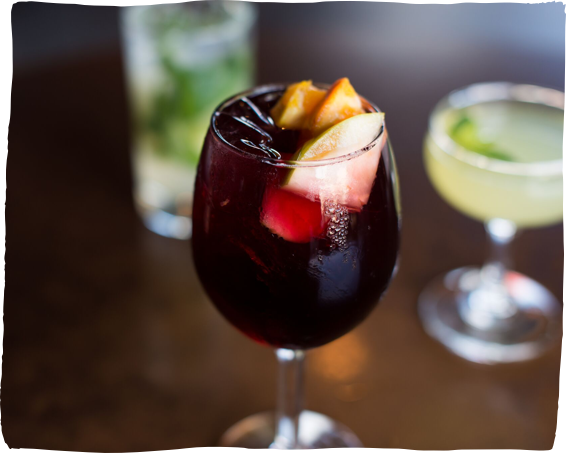
In Spain, Tapas are almost always accompanied by wine. They are not so much about talking as they are about eating and drinking. The wine is the medium that holds the conversation with friends and the food together. You make time to enjoy the moment in an unhurried way. The threefold purpose of snacking on tapas is to dull any hunger pangs that have built up since the previous intake of comestibles, to whet the appetite for the next, and to stimulate sociability, at which the Spanish excel.

The Spanish hate to see delicious sauce go to waste, which is one of the reasons that bread, especially a crusty bread, is found in virtually every Spanish meal. There is a Spanish idiom, "hacer una barca," which means "to make a boat." The idea is that you sail a boat of bread around the plate, taking on the sauce.